
The Two Sides of Immigration Empathy
We all feel something. But rarely for the same people. This is about how identity and emotion shape who we see as worthy of empathy — and who we ignore.
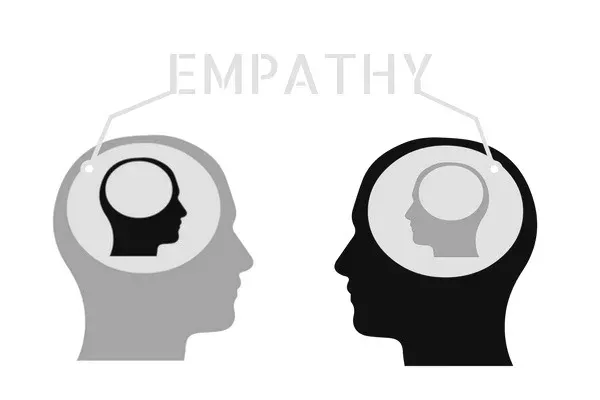
Some mourn deeply when a person is deported, detained, or separated from their children. Mention a family torn apart by the violent actions of someone who entered the country illegally, and the conversation often shuts down. Suddenly, empathy has limits. And they’re not where you’d expect.
The reverse is true as well.
Many express outrage over crimes committed by people who entered the country illegally, yet feel nothing when a father — who crossed the border illegally years ago, has no criminal record, and quietly contributes to his community — is deported, leaving U.S.-born children behind. In that moment, compassion evaporates. The law was broken, and for some, that’s where empathy ends.
The Empathy Reflex and Its Selective Logic
Empathy is an essential human trait — but it’s not an equal-opportunity emotion. Studies show that we feel stronger empathy for individuals we can identify with, especially when they are framed as powerless or under threat. This is known as the identifiable victim effect, and it was documented by Paul Slovic in his work on psychic numbing. The more personal the story, the more we care — even if the broader harm is greater elsewhere.
In the immigration debate, this manifests clearly: photos of children crying at border detention facilities flood our screens to evoke an immediate emotional response. But the stories of American families who’ve lost loved ones to crimes committed by people here illegally rarely get the same airtime — and when they do, they’re often framed as partisan “talking points.”
This isn’t an accident. It's a moral asymmetry created by narrative design — and psychology explains it.
Why Some Feel So Deeply — and So Selectively
For many, empathy becomes a form of moral identity. Jonathan Haidt, in The Righteous Mind, explains that liberals tend to prioritize the moral foundations of “care/harm” and “fairness” over others like loyalty or authority. As a result, any perceived suffering — especially by a marginalized person — triggers a deep emotional reaction that often overrides analytical thinking.
This is where Paul Bloom’s critique in Against Empathy becomes essential: empathy, he argues, is biased, reactive, and emotionally exhausting. It can lead people to support emotionally satisfying policies — not effective ones. “Empathy,” he writes, “is a spotlight focusing on certain people in the here and now. It’s a moral mistake to make decisions based on it.”
And yet, we do. Constantly.
But conservatives are not immune to emotional thinking either — it just manifests differently. Where the left reacts to perceived harm, the right often responds to perceived violation — of laws, traditions, or national identity. This, too, is rooted in moral psychology. Haidt also notes that conservatives tend to value “loyalty,” “authority,” and “sanctity” alongside “care” and “fairness,” which can make them more sensitive to threats against social order or group cohesion.
So while the left might fixate on the suffering of someone being deported, the right may feel a visceral moral clarity: rules were broken, consequences follow. In this framing, showing leniency isn’t compassion — it’s injustice.
In both cases, the emotional response often precedes — and shapes — the policy position.
What Gets Ignored — and Why It Matters
When American citizens are harmed by illegal immigrants, it introduces a truth that many find uncomfortable: that compassion without accountability can create new victims. Victims who aren’t as politically convenient. Victims whose stories challenge the dominant moral narrative.
Rather than wrestle with that discomfort, many choose silence. But silence doesn’t protect the vulnerable. It just redefines who counts as one.
Fear Is Emotional Too — We Just Pretend It’s Not
While one side is often accused of being cold and logic-driven, its response to immigration is also deeply emotional — just coded differently. Fear of crime, fear of cultural erosion, fear of instability — these are primal responses, often disguised as “common sense” or “law and order.”
In truth, both sides lead with emotion. One cries. One tightens its grip. Neither wants to admit how reactive they really are.
The Cost of Emotional Politics
When we let feelings dictate policy, we stop solving problems and start moralizing them. Emotionally charged arguments produce short-term relief and long-term dysfunction.
The result? A broken immigration system. Human smuggling. Exploited labor. Terrorized border towns. Dead families — on both sides of the border.
No one wins. But at least one side still feels good about their intentions.
In Closing
We need compassion. But we also need clarity. Empathy without discernment is dangerous. It creates heroes and villains based on narrative convenience — not truth or policy.
If we want real reform, we’ll have to ask harder questions. And we’ll have to care about all victims — not just the ones who fit our emotional profile.
— Blackout Editions
No bios. No signatures. Just truth, in black and white.
blackouteditions.com
💬 Have thoughts? Disagree? That’s the point. This is a space for hard conversations — no labels, no filters. Subscribe to stay informed. Share to keep others sharp.