
The Crime They Won’t Confront: The Left Turns Their Backs on Safety
From D.C. to Chicago to California, leaders keep saying the streets are safe while crime surges. Trump’s crackdown in D.C. showed results, but Illinois and California refuse his help—even as violence keeps rising.
IN WASHINGTON, D.C.
For months, Democratic leaders and their media allies kept touting the same message: crime was under control, violent crime was dropping, the city was getting safer. Charts and dashboards showed green arrows, officials talked about progress, and the press repeated the line.
But anyone living in D.C. knew better. They saw boarded-up storefronts, crowded corridors that felt unsafe after dark, and neighborhoods where smash-and-grabs had become routine. Carjackings, muggings, assaults, and even murders were happening while the numbers claimed improvement.
Residents were frustrated, and whispers were growing louder: the official story didn’t match reality. People could feel something was off, and soon the truth started leaking out.
Reports began surfacing that the rosy numbers weren’t what they seemed—that violent crimes were being softened or recategorized to make the city look safer on paper than it really was.
THE ILLUSION OF SAFETY
Before the shift in D.C., the disconnect was obvious.
Whistleblowers were already sounding alarms, confirming what many suspected: crime wasn’t truly falling—it was being hidden. Assaults were logged as “disturbances,” armed robberies as “lost property,” and violent incidents were quietly shuffled into softer categories to keep dashboards looking clean. It wasn’t sloppy; it was deliberate. At least one police commander is now on leave, and federal investigations are underway.
Residents didn’t need charts to know the truth. Anyone walking Adams Morgan after dark, riding the Metro at night, or running a small business could see it: muggings on side streets, armed robberies outside restaurants, carjackings in broad daylight, brazen smash-and-grabs leaving owners sweeping glass, murders that made headlines, and sexual assaults that rattled neighborhoods.
What made it worse? Repeat offenders were back on the streets almost as quickly as they were arrested. The same names kept appearing in police blotters. Victims saw attackers re-released, and business owners watched the same thieves return days later.
Meanwhile, police officers were increasingly demoralized. They talked about being told to stand down, about resources tied up in politics instead of policing, about orders from a mayor more concerned with optics than safety. Morale dropped, and visibility dropped with it.
Stolen cars were dumped blocks away. Windows stayed boarded. Open-air drug markets thrived. Families went out less, commuters altered routes, shopkeepers closed early, and neighbors quietly traded tips on which areas to avoid.
Yet officials kept saying, “Crime is down. Trust the numbers.” But fear can’t be spun away. When violence is routine, when repeat criminals are free, and when law enforcement is sidelined, a graph doesn’t change the truth.
ACTION OVER OPTICS
When the numbers stopped matching what people saw on the streets, Trump acted.
D.C. is unique: it’s federally governed. And unlike mayors or governors, the President can step in. In August 2025, he did just that: federalizing the Metropolitan Police Department and deploying National Guard units across the city. Corners that once felt unsafe suddenly had uniformed presence. Metro stations saw patrols. Warrants were served. Federal prosecutors moved cases faster, cutting through the gridlock that had let offenders slip through.
This wasn’t a press conference, a hashtag, or another “task force” destined to gather dust. It was boots on the ground—soldiers and officers cleaning up what local leadership had let slide.
Trump’s message was clear: “If you can’t keep your own city safe, I will.”
The results were immediate and visible. For the first time in months, D.C. went days without a homicide. Carjackings slowed. Robberies dropped. Open-air drug dealing was pushed back. Businesses noticed. Families noticed. Even critics admitted the city felt calmer, more controlled. People were walking with less fear, tourists were coming back, and neighborhoods that had felt abandoned were suddenly seeing a real police presence.
And Trump didn’t stop there. On August 25, 2025, he signed two executive orders aimed squarely at what he called “revolving-door justice.” One threatened to cut federal funds from jurisdictions using cashless bail for violent crimes. The other scrapped D.C.’s bail reforms entirely, requiring high-risk suspects to stay behind bars and allowing federal prosecutors to bypass local policies.
His language was blunt: “They kill people and they get out. Not anymore.”
Supporters called it common sense—finally stopping repeat offenders who treated arrest as a revolving door. Critics called it theater. But residents didn’t care about academic debates. They cared about whether they could walk home without fear, whether the same names kept coming back onto the streets, and whether anyone in leadership seemed to notice.
For Trump, that’s the point: it’s about what people feel, not what manipulated spreadsheets say. And in Washington, the difference is obvious—streets are calmer, residents are talking about safety again, and leadership is showing what action looks like.
But outside the capital, the story is very different.
Illinois and California are watching the same problems grow and the same crimes repeat, yet their leaders refuse to change course—even after seeing it work in D.C.
WHERE HELP IS REFUSED, CRIME THRIVES
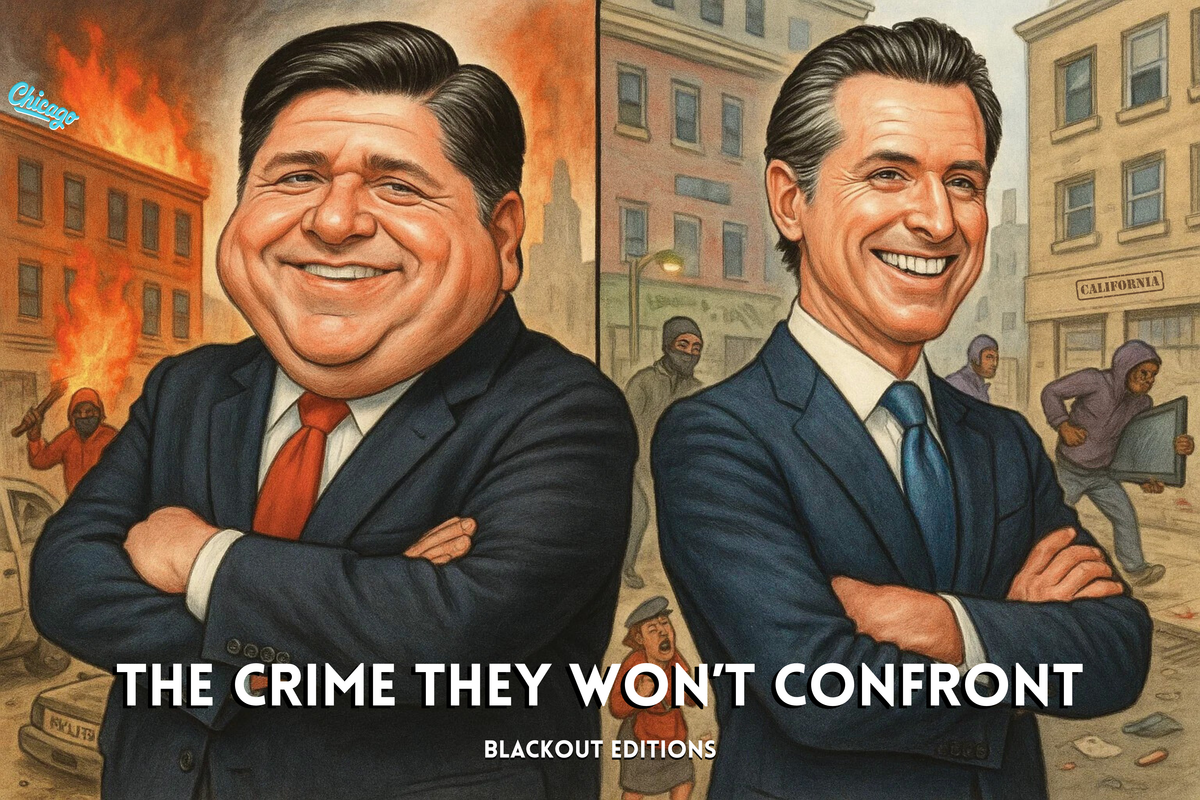
Illinois: Governor J.B. Pritzker is still defending the SAFE-T Act, which eliminated cash bail and stripped away policing tools while residents are demanding more security, not less. Meanwhile, Chicago is battling carjackings, gang violence, retail theft so blatant stores are closing, and murders stacking up weekend after weekend.
Neighborhoods that once thrived are now marked by sirens and tape. Families are burying loved ones. Residents are changing routines, skipping the ‘L,’ avoiding entire districts after dark. And when Trump offered federal help—more eyes, more manpower, tougher enforcement—Pritzker didn’t just say no—he mocked it, calling the move “authoritarian” and claiming Trump was acting like a dictator. Chicago’s Mayor Brandon Johnson echoed the same script, branding stronger enforcement “racist” and “immoral,” even as the body counts climb and residents worry about walking home at night.
California: Gavin Newsom runs some of the richest cities in the country—and some of the most chaotic streets. Tech towers rise over sprawling tent camps. Boutique shops sit next to boarded windows. Families and tourists are warned to stay away from entire neighborhoods.
The problems aren’t subtle. San Francisco’s shoplifting crews strip stores bare. Oakland fights rising assaults and theft. Los Angeles faces waves of smash-and-grabs, muggings, fentanyl overdoses, and encampments taking over sidewalks. Skid Row bleeds into business districts. Open-air drug use is routine.
Yet when federal help is offered, Newsom resists, framing it as a power grab. Los Angeles Mayor Karen Bass, while more measured, still keeps her distance—talking about compassion and reform while crime keeps making headlines.
The result? Streets where bold criminals thrive, businesses lock their doors early, commuters change their routes, and families wonder who’s in charge. Californians are watching a growing sense of disorder while leadership seems more interested in appearances than answers.
The truth is simple: these leaders fear what D.C. proved—that decisive action works. And they’d rather protect the narrative than protect their people.
THE UNSETTLING TRUTH—PARTISAN DEFENSE OF CRIME OVER CITIZENS
This isn’t just about crime data. It’s about leaders choosing spin over safety.
When boarded windows become the wallpaper of downtowns, when families avoid transit after dark, when small businesses bleed money to theft and security costs, leadership is supposed to step in. Instead, too often they protect the storyline—treating criminals as victims, turning enforcement into an afterthought, and releasing the same offenders to repeat crimes over and over.
They can't help themselves; if Trump does it, they oppose it.
It doesn’t matter if the streets calm down or the numbers improve. D.C. showed action. Illinois and California are showing excuses.
Admitting failure is unthinkable. Conceding an opponent might be right is political suicide. So instead of governing, they brand. Safety becomes a slogan, not a standard.
The result is predictable: communities exposed, businesses fleeing, families moving out, and growing distrust in every institution meant to keep order.
Voters don’t care about talking points. They care about whether their kids can walk home without looking over their shoulder, whether their café survives another weekend without a break-in, whether their taxes buy safety or just spin. They care if their neighborhood park is safe after dark, if their commute doesn’t feel like a gamble, and if the police are allowed to do their jobs. They care whether the people sworn to protect them are focused on the streets or the headlines.
That’s why Blackout Editions exists—to call it what it is, not what they say it is. To ask the question leaders avoid: when did protecting the story become more important than protecting the people?
Blackout Editions
No bios. No signatures. Just truth, in black and white.
👉 blackouteditions.com
💬 Disagree? Good. That’s the point.
This is a space for hard conversations—no filters, no apologies.
Subscribe to stay sharp. Share to keep others honest.