Jeans vs. Ideology
A simple jeans ad sparked outrage, with activists seeing hidden agendas in denim. As the cultural monopoly slips, everyday Americans are reclaiming normalcy and pushing back against performative outrage. It's time to choose authenticity over ideology.
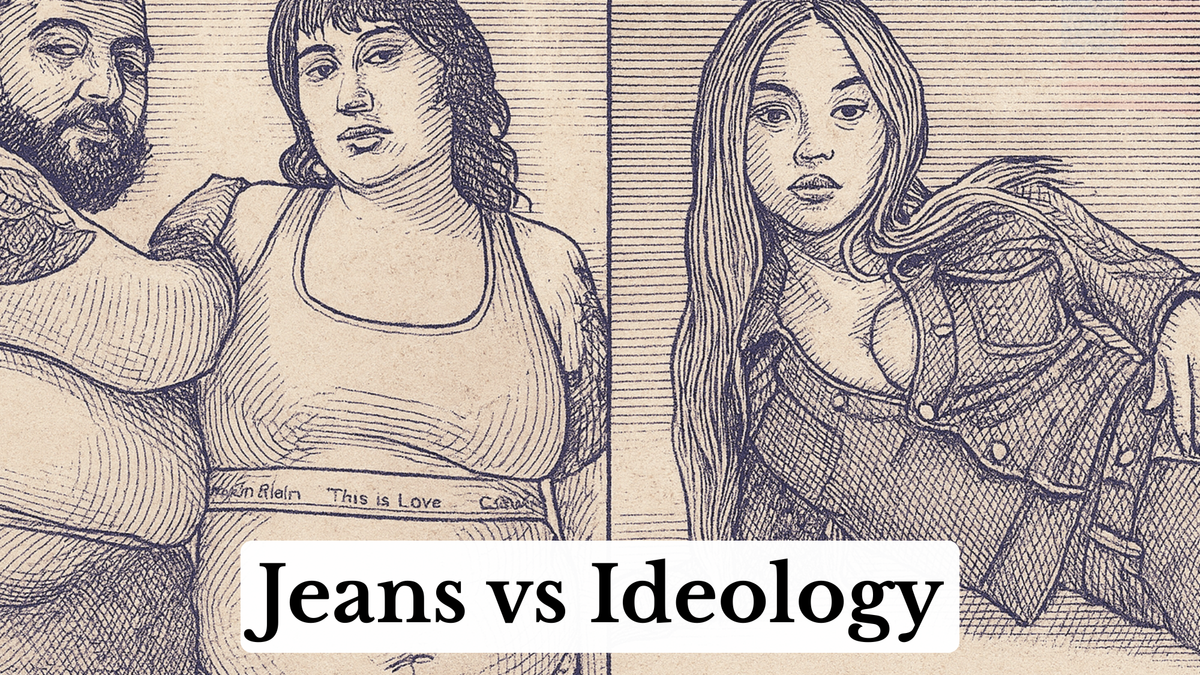
Sydney Sweeney zipped up a pair of jeans and said they were blue. That was it.
A new ad campaign from American Eagle—built around a pun, “great jeans”—sparked a full-blown online meltdown. Activists projected eugenics, Nazi symbolism, and white supremacy onto a woman modeling pants. No agenda. Just a blonde actress in denim. And somehow, that was enough to trigger the outrage class.
They See Fascism Because They’re Losing Control
So why did a simple jeans ad feel like an existential threat?
For nearly a decade, being offended by normalcy was the norm.
Woke culture thrived by turning everything into a statement—gender, race, body type, politics. Ads weren’t just ads. They were battlegrounds.
But that power is slipping.
Once Trump took office, he began implementing exactly what he ran—and won—on.
- He said there are only two genders—and millions cheered.
- He said DEI is dead—and states started cutting funding, workplaces stopped pretending, and the apology tours got shorter.
- He mocked the ideology they built their identities around—and suddenly, fewer people were scared to speak plainly.
The overreach is finally being rejected.
And now, when they see something normal—like a blonde woman in a pair of jeans—they don’t just feel uncomfortable.
They feel exposed.
Because it reminds them: the cultural monopoly is breaking.
They don’t see eugenics in denim because it’s there.
They see it because they need it to be there—so they can keep playing the victim in a world that’s tuning them out.
What We Got When They Were in Charge
The outrage crowd behind the jeans panic weren’t fringe trolls—they ran our institutions for years. From campuses to corporate boardrooms, from public health offices to the White House, their worldview shaped everything.
Here’s the legacy they left:
- Bud Light’s meltdown: a gender-politics partnership with Dylan Mulvaney that tanked a century-old brand.
- Men in women’s spaces: locker rooms and restrooms remapped by policy—while the women who raised alarms were silenced.
- “Female” world records: biological males sweeping swimming, track, cycling, and weightlifting—cheered on by the media.
- Secret transitions: schools hiding student gender changes from parents in the name of “affirmation.”
- DEI over competence: identity quotas trumping merit in hiring, academia, and entertainment—until the backlash forced quiet rollbacks.
- Safe‑space culture: therapy animals, trigger warnings, and padded rooms on campus to shield students from any uncomfortable idea.
- Speaker bans: dissenting voices disinvited and open debate replaced by ideological echo chambers.
- Sanitized entertainment: TV shows, movies, music, and comedy stripped of risk or real humor to avoid “offense.”
- Advertising reprogrammed: every campaign forced to tick identity boxes—trans models, plus-size stars, virtue-signal slogans—under the guise of “inclusion.”
- Censorship as protection: social platforms shadowbanning dissent, fact-checkers policing thought, and “safety labels” on any idea they dislike.
- Crime redefined: rioters lauded as “peaceful” while concerned parents were branded extremists defending their children.
None of it was accidental. These were features of an ideology that sees everything—even a woman in blue jeans—as politics.
Because if normal can exist without their permission, they lose control.
And they know it.
How “Woke” Snuck Into Every Part of Our Lives
It didn’t happen overnight—but over the last decade, the idea that everything is political quietly crept out of college campuses and into our daily routines. What began as academic theory in gender-studies classes—spotlighting power hierarchies and intersectional identity—soon became a moral framework for everyday life: spot an oppressor, amplify a victim, and outrage is the only acceptable response.
Then came social media. Platforms discovered that bite-sized fury drives clicks far better than reasoned debate. One viral post about a perceived slight could dominate your feed in minutes, training everyone to hunt for the next thing to be offended by. News outlets and click-bait websites smelled opportunity, flooding 24/7 headlines with every “woke win” or “offensive ad”—because outrage translates directly into ad revenue.
Brands scrambled to keep up. Fearing cancellation, they plastered their ads with trans influencers, plus-size models, and virtue-signal slogans—any sign they were “inclusive” enough. What started as cautious nods to diversity became an anything-goes race to tick every social-justice box. Meanwhile, foundations and Hollywood A-listers poured money, fame, and credibility into each new cause, making neutrality feel like complicity.
Then came the Biden administration and the Democratic Party. In 2021, President Biden signed executive orders embedding “equity” requirements across every federal agency, funneled billions into DEI programs, and positioned woke advocates in top posts—from the Department of Education rewriting Title IX for gender identity to the Pentagon mandating inclusive training. Congressional leaders, including Speaker Pelosi and Senate Majority Leader Schumer, championed diversity bills and funded woke curriculum in public schools. Suddenly, ideology leapt from corporate boardrooms into the very fabric of government.
All of this found fertile soil in a society hungry for purpose. As globalization hollowed out communities and stagnant wages stretched family budgets, many longed for a clear moral compass. Wokeness offered that simplicity: identify who’s oppressed, rally behind them, and you’re on the “right side” of history.
So by the time Sydney Sweeney zipped up her jeans and quipped about how “they’re blue,” millions were already primed to see a darker message. And that’s how a pair of ordinary blue jeans became the latest battleground in a culture that now treats normal as the ultimate offense.
The Counter‑Offensive: Standing Up for Normalcy
Thanks to President Trump’s unapologetic push to restore common-sense norms—affirming there are two genders, prioritizing merit over mandates, and advocating for free speech without fear—everyday Americans are pushing back against the outrage machine in real time. The cultural gatekeepers who once cried fascism over a pair of blue jeans now find themselves losing ground.
Across social media, #JeansAreNotGenes is trending, with ordinary people sharing photos of themselves in denim—no slogans, no identity checklists—just confident smiles. Influencers who once rode the wave of virtue-signaling are now calling for an end to performative outrage. They argue that beauty, humor, and even politics should be judged on substance, not on who is offended. Even late-night TV feels the pressure, with networks quietly pulling one-sided shows that failed to represent the broad diversity of views across the country. The cancel culture that once dominated is slowly being replaced by a desire for real, open dialogue.
Brands, too, are beginning to recognize the shift. Denim-first labels like Mott & Bow and direct-to-consumer staples like Everlane are rolling out campaigns that feature simple, classic designs with the tagline, “No agenda. Just you.”These brands understand that consumers want authenticity, not ideology. Meanwhile, national outlets are publishing op-eds defending marketing that doesn’t rely on virtue-signaling but focuses on selling aspiration and quality. The message is clear: authenticity still outperforms buzzwords, and people are hungry for it.
On the policy front, bolstered by Trump’s federal rollbacks of DEI mandates and his vocal support for free speech, Republican governors in Texas, Florida, and Arizona have signed bills banning taxpayer-funded diversity, equity, and inclusion (DEI) programs. Dozens of school boards and city councils have voted to strip “equity audits” from their budgets, signaling a shift in public sentiment. Even some Democrats, sensing the winds changing, are quietly backing away from aggressive gender policies. However, liberal strongholds like California continue to push the status quo—yet even there, support for these policies is rapidly eroding.
In the cultural sphere, commentators from late-night hosts to talk-radio veterans are rediscovering the appeal of simple, relatable stories. Comedy is returning to its roots—offending equally, without fear of retribution. Podcasts and news segments focusing on jobs, family, and faith are dominating the charts, showing that Americans are ready for content rooted in real life, not the latest outrage. It’s clear that the pendulum is swinging back in favor of normalcy.
A Message to Those Who Insist on Control
To those who still insist that nothing can remain neutral, that every image and idea must pass through the filter of virtue: consider what you’ve done. By making every facet of life political, you’ve created a culture of tokenism, not inclusion. You’ve replaced genuine diversity of thought with a checklist of sanctioned identities.
But the truth is, when everything becomes politics, authenticity is suffocated. If you truly believe in justice and belonging, start loosening your grip. Allow art to offend, allow humor to surprise, and allow faith to comfort. True unity doesn’t come from mandates handed down from the top; it grows organically when people are free to live without being policed.
The Choice Ahead
The denim panic isn’t just a viral meme; it’s a warning. We’ve seen what happens when everyday acts are treated as existential threats, and we’ve felt the cultural and political consequences of living in a world where even normalcy is suspect. But today, something different is happening. Ordinary Americans are refusing to stay silent. They’re posting their unfiltered selfies in denim, championing brands that prioritize quality over identity checklists, and reminding our leaders that common sense and free speech belong to everyone.
This isn’t a call to chaos—it’s a rallying cry to reclaim what unity truly looks like. It means celebrating the things that bind us together—family dinners, honest jokes, and the rituals that make us human. It means rewarding companies that market aspiration and authenticity, not dogma. It means showing up at school boards and town halls to ensure that education and debate remain open to every voice. True inclusion isn’t imposed from the top down—it grows when people are trusted to share their own stories.
A society that bans denim is a society that fears its own people. Leadership isn’t about controlling our pants—it’s about fiercely defending the freedom to wear them, and to live freely in all aspects of life. If a pair of jeans can unite the silent majority, imagine what genuine ideas—rooted in reality, not reaction—can achieve. Now is the time to choose normalcy over noise, substance over spectacle, and genuine connection over manufactured outrage.
The time has come to reclaim normalcy—before they decide it’s not allowed at all, again.
Blackout Editions
No bios. No signatures. Just truth, in black and white.
👉 blackouteditions.com
💬 Disagree? Good. That’s the point.
This is a space for hard conversations—no filters, no apologies.
Subscribe to stay sharp. Share to keep others honest.