
Ideology Vs Leadership
I never thought I’d see New York come this close to electing a mayor with no executive experience — just a radically socialist platform and a long, public record of antisemitic rhetoric.
Not because he’s earned the trust to lead one of the most complex cities in the world. But because too many voters are exhausted, disillusioned, and desperate to feel seen in a system that so often pushes them aside.
And that exhaustion? It’s real. But channeling it into this kind of leadership isn’t progress. It’s collapse — and the consequences are already arriving.
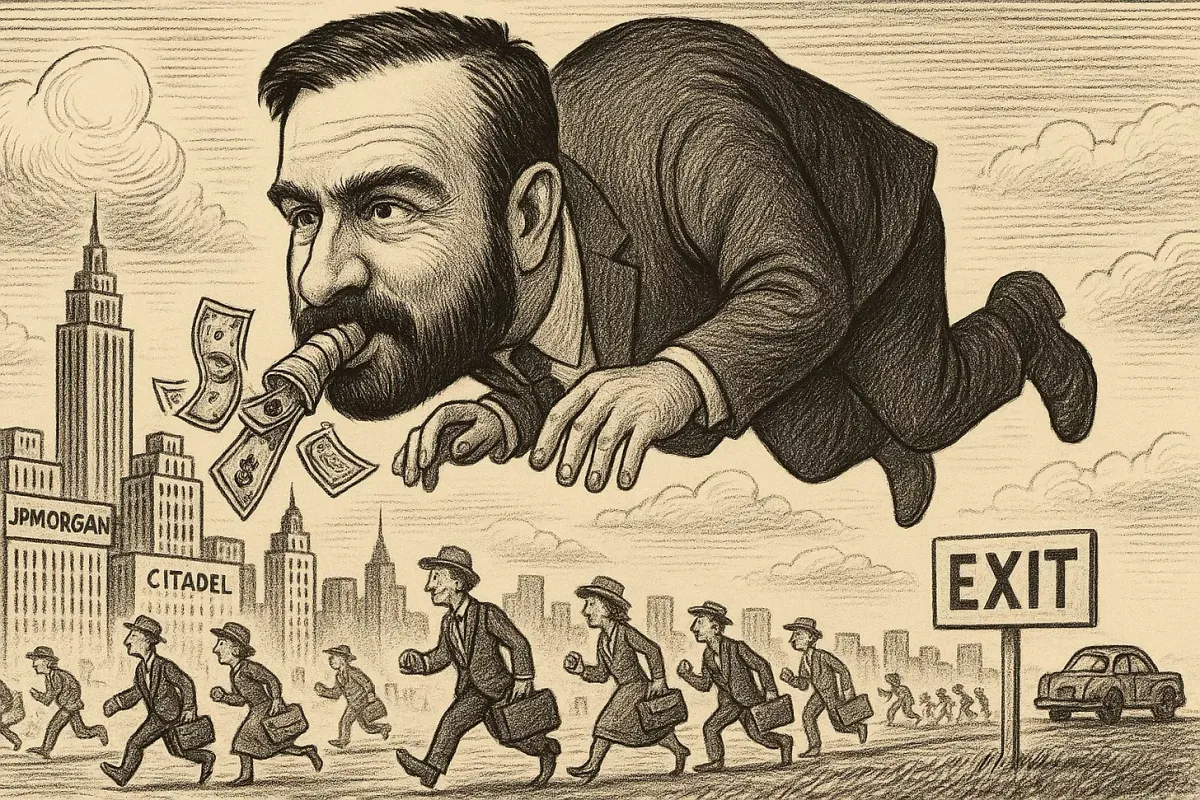
Wall Street is leaving. JPMorgan is expanding in Texas. Citadel is shifting operations to Florida. A new stock exchange is launching in Dallas. Tech firms are booming in Austin, Nashville, Miami. And they’re not just moving desks. They’re taking jobs, capital, influence, and long-term investment with them.
Why? Because they see what’s coming: a climate where success is punished, ideology replaces practicality, and policy is driven by emotion instead of economics.
Let’s be clear — this isn’t about defending billionaires. It’s about what happens when the economic foundation of a city is quietly dismantled. When finance and industry leave, they don’t just take luxury apartments and overpriced restaurants. They take the tax base — the very funding that supports public schools, transit, hospitals, affordable housing, and emergency services.
When that money disappears? The burden doesn’t vanish. It shifts — onto working people.
Small businesses feel it first. The diners, barbershops, bodegas — the heartbeat of local neighborhoods. They’re already walking a tightrope: fewer commuters, fewer tourists, rising costs, and little protection. Most operate on razor-thin margins. One more disruption, and they’re gone.
Next, it hits the middle and working class. The people who believed the promises — free housing, free transit, more support, less struggle — will find themselves stuck in a system that was overpromised and underfunded. With fewer jobs, broken services, and crumbling infrastructure, they won’t be lifted up. They’ll be left behind.
And while this unfolds, crime will rise. Not just because of failed ideology, but because of desperation. We’ve seen this story before. And we know how it ends.
To make matters worse, this candidate has publicly called to defund the police. No matter your politics, that’s reckless — especially in a city still recovering from past crime waves and ongoing instability. Undermining public safety when it's already fragile isn't bold. It's irresponsible.
Fewer patrols. Slower response times. Less deterrence. The fallout won’t land on the wealthy. It will land on working-class families who no longer feel safe in their own neighborhoods.
And this won’t stay in New York.
New Jersey is already feeling it. As more people flee the city, housing prices spike. Transit systems overload. Public services stretch thin. It becomes a pressure valve for a city in decline — absorbing the damage, reaping none of the reward.
But even that may not last. If companies pull out for good, New Jersey residents won’t need to commute to Manhattan anymore. They’ll stay local. Work remote. Or follow the jobs to Florida, Texas, or North Carolina. That’s not just a personal decision. It’s a massive tax shift out of the entire Northeast. And when that happens, the regional economy begins to buckle.
As if all that weren’t enough, something even more disqualifying is being ignored.
And it’s not just about one candidate.
This is part of a larger takeover: the Democratic Party is being slowly redefined by its most radical flank. Candidates like Zohran Mamdani in New York and Omar Fateh in Minneapolis aren’t anomalies anymore — they’re becoming the new model. Their rise isn’t based on leadership experience or broad appeal. It’s driven by ideology, online momentum, and a growing base of disillusioned voters willing to trade competency for confrontation.
This isn’t a local glitch — it’s a national trend. The party’s bench is shrinking. There are fewer candidates with executive experience, cross-party respect, or the ability to unify coalitions. In their place, we’re seeing a wave of political performers — people who generate headlines, stoke outrage, and prioritize spectacle over service. These aren’t leaders prepared to govern. They’re activists auditioning for a platform.
And while that may fire up a small, vocal base, it’s alienating the very people the party claims to represent. Working families. Moderate voters. Immigrants. Union members. Everyday citizens who want safer streets, better schools, and functioning infrastructure — not symbolic gestures and ideological crusades.
It’s a dangerous evolution. Because when parties abandon leadership in favor of theater, everyone pays the price.
The man at the center of this moment has a long, public record of antisemitic statements. That’s not a smear. It’s a pattern. And even now, under scrutiny, he refuses to fully disown his most incendiary remarks.
Mamdani continues to deny that he called for a “global intifada,” brushing it off as language he no longer uses, without acknowledging the real harm it implies.
Meanwhile, he’s met with top Democrats — including Schumer and Jeffries — yet neither has endorsed him. That silence speaks volumes. The hesitation isn’t just political. It’s moral.
And yet, many are willing to look the other way. So eager for "change" that they excuse bigotry as righteous anger.
That’s not just misguided. It’s dangerous.
This isn’t leadership. It’s a protest vote turned into policy. A fantasy sold as justice. And the second it collides with reality, it collapses.
Because when the streets are dirtier, when the subways are emptier, when hospitals cut services and families can’t afford to stay — no one will be quoting campaign slogans. They’ll be asking: What the hell happened?
Let’s be clear: this isn’t a defense of the status quo. New York has deep problems — corruption, inequality, and a growing disconnect between leaders and the people they serve.
But burning everything down because you hate the wallpaper? That’s not reform. That’s ruin.
There are better paths forward. Through reform, not revenge. Through leaders who know how to build, not just tear down. Through policy rooted in principle and practicality — not vendettas masquerading as vision.
We don’t need perfect candidates. But we need serious ones. People who’ve run more than a Twitter account. People who understand public trust, infrastructure, budgets — and how to lead without turning the city into a stage.
New York doesn’t need a symbol. It needs a mayor.
— Blackout Editions
No bios. No signatures. Just truth, in black and white.
blackouteditions.com
💬 Have thoughts? Disagree? That’s the point. This is a space for hard conversations — no labels, no filters. Subscribe to stay informed. Share to keep others sharp.